
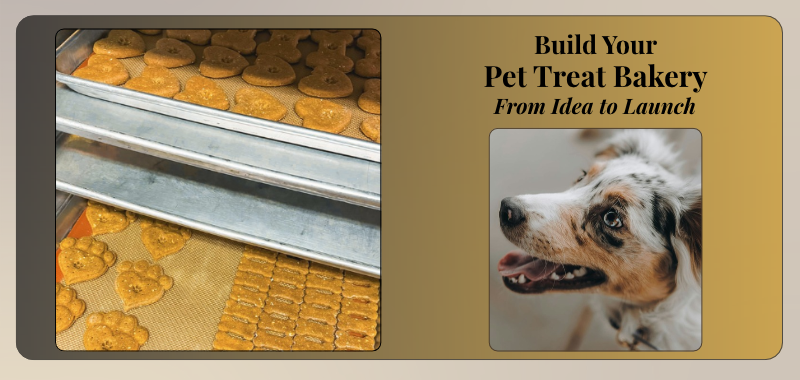
Many dog lovers enjoy baking homemade treats for their pets, but some dream of starting a pet treat bakery and turning that passion into a business. Turning a favorite hobby into a successful pet treat bakery takes more than great recipes. It requires planning, consistency, safe ingredients, and a clear understanding of what customers want.
In this guest article, Sharon Wagner shares practical advice for starting a pet treat bakery, from developing repeatable recipes and handling permits to pricing products and building a sustainable production system. Whether you’re considering selling treats at local markets or building an online brand, these tips can help you start with confidence.
By: Guest Contributor: Sharon Wagner
Aspiring pet bakery owners, especially home bakers, cottage food sellers, and local business owners, are drawn to a pet treat bakery startup because market demand for pet treats keeps rising alongside pet food industry trends that favor simple ingredients and thoughtful brands. The tension is real: turning a love of pets into a reliable business means meeting picky pet owner consumer behavior while staying consistent, compliant, and profitable. Small business opportunities like this reward people who can balance creativity with routines and responsibility. With the right expectations, a pet treat bakery can become a steady, trusted name in a community.
Build Your Pet Treat Bakery From Idea to Launch
This roadmap helps you go from a treat idea to your first real sales by turning your recipes into a compliant, cost-aware, easy-to-market business. It matters because most beginner setbacks come from skipping basics like permits, pricing, and a clear reason customers should choose you.
- Step 1: Define your niche and signature promise
Start by writing a simple statement of who you serve and what you sell best, such as limited-ingredient training bites, birthday “pupcakes,” or allergy-friendly treats. Use the idea behind defining your USP to choose one clear differentiator you can prove in every batch. This focus keeps your menu tight, your shopping list simple, and your marketing consistent. - Step 2: Develop 3 to 5 recipes you can repeat perfectly
Test a small starter menu and record exact weights, bake times, cooling time, and storage notes so every batch matches the last. Ask a few pet owners for feedback on size, smell, packaging, and crumbiness while keeping safety first and avoiding risky ingredients. Consistency is what turns a fun bake into a dependable product people re-order. - Step 3: Choose your production setup and selling spot
Decide whether you will bake from a home kitchen (if allowed), a shared commercial kitchen, or a small storefront space. Scout places where your ideal customers already spend time, like pet boutiques, groomers, weekend markets, or local pickup shelves. Pick the simplest setup that still lets you produce safely and on schedule. - Step 4: Confirm permits, labeling, and basic operating rules
Make a checklist of what your area requires, such as business registration, food handling rules, facility approvals, and sales tax setup if applicable. Then align your labels and packaging with what you actually do, including ingredient lists, net weight, and storage guidance. Handling compliance early prevents expensive reprints and last-minute delays. - Step 5: Estimate costs, source ingredients, and plan your first marketing push
List startup expenses like equipment, packaging, permits, test batches, and an initial ingredient run, then price each item with room for waste and your time. Find two sources for every key ingredient and packaging item so you are not stuck if one supplier runs out. Launch with one simple offer and one channel you can maintain, like pre-orders, a market table, or wholesale samples to pet businesses.
Choose a Business Structure That Protects Your Bakery
Once you’ve mapped your idea into a real plan, it helps to put the right legal structure underneath it before you start selling. Forming an LLC can help shield your personal assets if the business runs into legal or financial trouble, and it also signals that your pet treat bakery is a legitimate operation, not just a hobby. That credibility can make it easier to grow with confidence as you move from test batches to consistent sales. To form an LLC, you’ll typically need to name a registered agent, file Articles of Organization with your state, create an operating agreement that spells out how the business will be run, and apply for an EIN (Employer Identification Number). If you’d like a bakery-focused walkthrough that covers those setup steps in plain language, follow this bakery business model.
Plan → Bake → Check → Sell → Review
This weekly rhythm turns your pet treat bakery into a repeatable system, not a series of one-off batches. It helps you balance creativity with consistency so you can track costs, prevent waste, and stay responsive to customers as orders grow.
| Stage | Action | Goal |
| Plan the menu | Choose 3 to 5 recipes; set batch sizes and prep list | Clear scope and fewer midweek pivots |
| Source and prep | Order ingredients; portion mixes; label allergens and dates | Faster bake days and safer handling |
| Produce and package | Bake in blocks; cool fully; portion; seal; add labels | Consistent treats ready for sale |
| Quality check | Inspect texture, smell, color; log issues; adjust next batch | Reliable quality and fewer returns |
| Sell and engage | Post availability; take orders; collect feedback; confirm pickup or ship | Predictable sales and customer trust |
| Review and restock | Reconcile inventory; calculate margin; schedule next cycle | Better decisions and steady supply |
Planning makes production smoother, and production data makes planning smarter the next week. As online sales channels continue expanding, the review stage also tells you when to shift time toward packing and fulfillment.
Pet Treat Bakery FAQs: Safety, Pricing, Growth
Q: What ingredients should I avoid to keep treats pet-safe?
A: Start with a short “do-not-use” list and keep it posted in your prep area. Skip common red flags like xylitol, chocolate, grapes and raisins, and anything heavily salted or seasoned. When in doubt, simplify the recipe and ask a veterinarian for ingredient guidance.
Q: How do I handle regulations and labeling without getting overwhelmed?
A: Focus on the basics first: an ingredient list, net weight, allergen notes, and a batch date so you can trace issues quickly. Keep a simple log of recipes, suppliers, and bake days to support consistency. If rules feel confusing, call your local small-business office and ask what applies to pet treats.
Q: How should I price treats so I actually make money?
A: Price from real costs: ingredients, packaging, overhead, and your time, then add a profit margin. Start with two sizes or bundles to test what customers prefer. Remember the food & treats segment is a major category in online pet shopping, so clear value and repeatable quality matter.
Q: When is it smart to scale up production or add new flavors?
A: Scale when you have steady reorders and your current schedule feels tight, not when you are simply bored. Add one new item at a time and track waste, prep time, and sell-through for two to three cycles. If the numbers dip, revert fast and protect your best-sellers.
Q: How can I keep customers coming back instead of buying once?
A: Make reordering effortless with predictable restock days and a simple “favorite flavor” reminder. Ask for feedback after each purchase and make one visible improvement, like sturdier packaging or clearer allergy notes. Loyalty grows when your product stays consistent and communication stays friendly.
Turn Pet Treat Bakery Plans Into Sustainable Weekly Momentum
Starting a pet treat bakery can feel like a tug-of-war between big entrepreneurial motivation and the real risks of safety, pricing, and consistency. The steady way through is a simple mindset: make goal setting for small business practical, test what works, and improve with each batch and customer conversation. When that approach guides decisions, confidence building for founders stops being a pep talk and becomes proof you can repeat. A sustainable pet business is built with small, safe steps done consistently.
DogBlog’s Closing Comments – Building Your Pet Treat Bakery business
Starting a pet treat bakery combines two rewarding pursuits: caring for dogs and building a small business. As Sharon explains, success often comes from mastering the basics before focusing on growth. Consistent recipes, thoughtful pricing, proper labeling, and attention to customer feedback can help create a strong foundation for long-term success.
If you’re exploring opportunities in the pet industry, you may also enjoy our guide on how to open a pet treat bakery and grow your business successfully. For broader insights into entrepreneurship in the pet space, check out how dog owners can start and grow a successful pet care business.
Have you ever considered selling homemade dog treats or starting a pet-related business? We’d love to hear about your experience in the comments