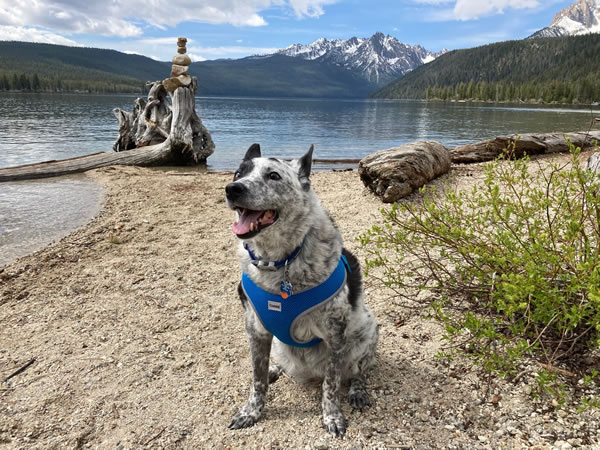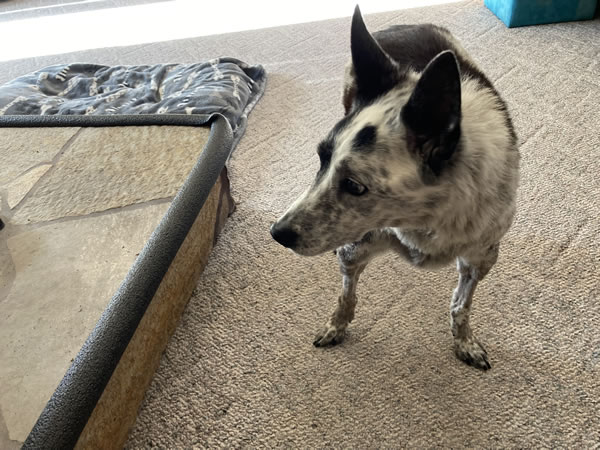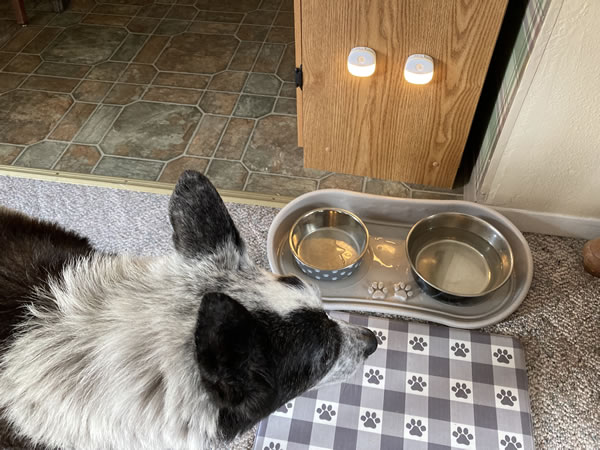
Many dog owners wonder, does my dog need to see an eye doctor, especially when their dog’s eyes begin to change with age. For us, the question became real when we noticed Blue Belle’s eyesight shifting as her cataracts progressed. After talking with her oncologist, Dr. Hume, we were referred to the ophthalmology team at her clinic.
Why Your Dog Might Need to See an Eye Doctor
Dogs can develop a variety of eye issues as they age, and some of them benefit from specialist care. If you’re wondering does my dog need to see an eye doctor, here are some signs:
- Cloudiness or whitening of the lens
- Hesitation in new environments or bumping into objects
- Redness, squinting, or excessive tearing
- Sudden changes in behavior, such as clinginess or anxiety
- A “blue haze” or visible changes in the pupils
- Difficulty seeing in low light
Cataracts are one of the most common reasons senior dogs see an eye specialist, but they’re not the only one. An ophthalmologist can help determine what’s happening and what options exist.
What Happens at a Dog Eye Doctor Appointment
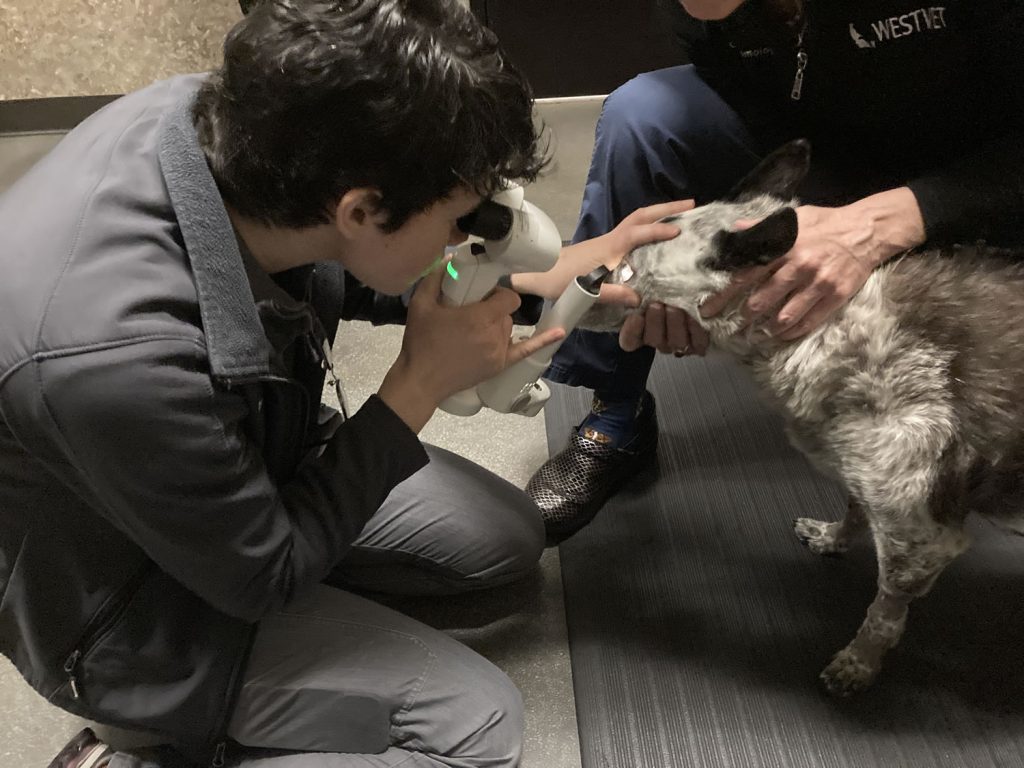
From the moment we entered the exam room, we felt the team’s kindness. Blue Belle was helped onto a soft mat and allowed to sit or stand however she felt most comfortable. Three team members assisted with the exam, moving calmly and gently around her.
The initial exam included:
- A close look at her eyes with a handheld instrument
- A check of her eye pressure (which was good — a relief)
- Turning off the lights to look deeper into the eye
- A stain test to check for corneal ulcers
- An eye wash to clear the stain
They explained each step and answered our questions along the way. Blue Belle panted loudly from the excitement, but she stayed calm, and they took wonderful care of her.
After taking a few photos of her eyes, the team stepped out to update Dr. Pederson before returning together.
Cataracts in Dogs: What Owners Should Know About Dog Eye Health
Dr. Pederson examined Blue Belle and confirmed cataracts in both eyes — more advanced in the left than the right.
We talked about cataract surgery, and I asked whether older dogs can still be candidates. Dr. Pederson explained that age alone isn’t a reason to avoid surgery; she has performed cataract surgery on dogs as old as sixteen and seventeen. What matters most is the dog’s quality of life and whether restored vision would meaningfully change their daily experience.
For some dogs, cataract surgery can be life‑changing. For others — especially quiet, sedentary seniors — the risks may outweigh the benefits. It’s a very individual decision.
Blue Belle’s Experience
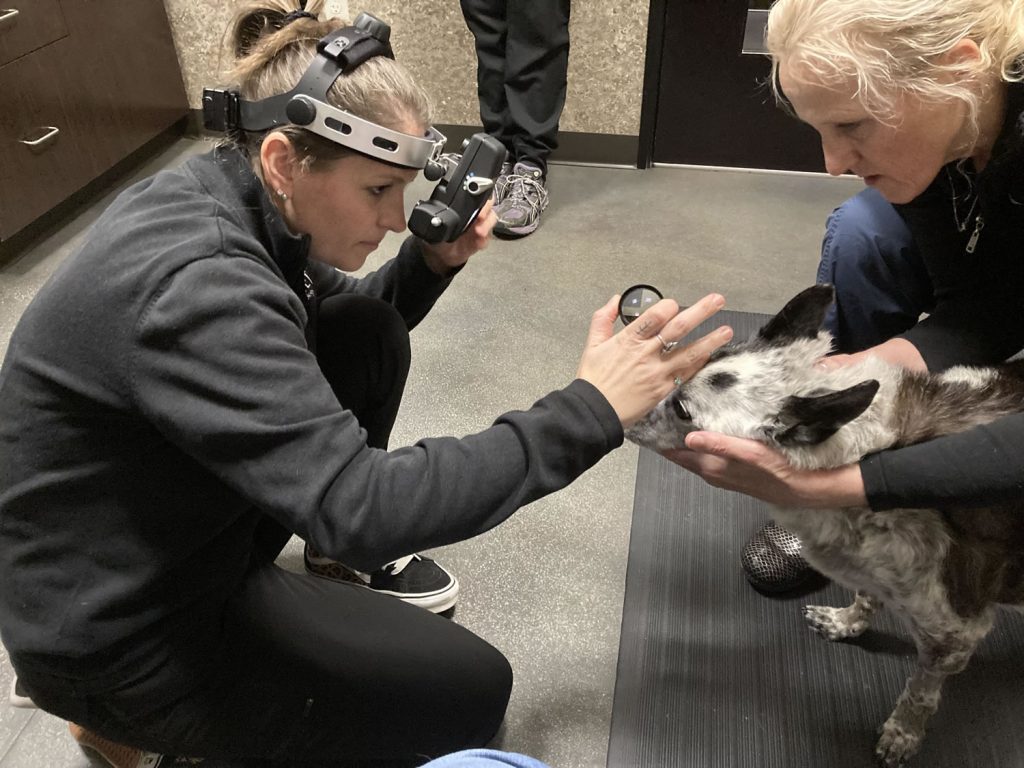
After Dr. Pederson’s exam, her team walked us through the risks, benefits, and costs of cataract surgery. They were clear, patient, and honest:
- Success rate: About 9 out of 10 dogs do well, but 10–15% may experience complications such as secondary glaucoma or retinal detachment.
- Serious surgical complications: Things like incisions reopening, severe hemorrhage, or anesthesia‑related death are very rare — far less than 1%.
- Cost: Pre‑surgical testing typically ranges from $1,000–$1,500. Cataract surgery for both eyes can be around $6,000.
They emphasized that they weren’t trying to talk us into surgery — only to give us options.
Because inflammation can develop inside the eye, they often prescribe anti‑inflammatory drops to prevent chronic inflammation and scar tissue, which can lead to glaucoma or other painful complications. These drops are used proactively, not just after problems appear.
Blue Belle will need daily eye drops for the rest of her life. They showed us how to give them, and she accepted them calmly. She also has some aging changes on her eyes, so she’ll be using an antibiotic ointment for 10 days.
Dr. Pederson sensed that “less is better” for Blue Belle and recommended once‑a‑day drops for now. We’ll return in six months for a recheck, and we were told to contact the clinic sooner if we notice squinting or discharge.
Encouragement for Other Dog Owners
If you’re noticing changes in your dog’s vision, trust your instincts. A veterinary ophthalmologist can help you understand what’s happening and what options exist — whether that’s surgery, medication, or simply monitoring.
Blue Belle might have qualified for cataract surgery, but we decided not to move forward with the testing or procedure. She’s comfortable and well‑supported with a plan that truly fits her life, and that’s what matters most.
Caring for a senior dog means learning to notice the small changes and meeting them with patience, curiosity, and love. Blue Belle may not see the world the way she once did, but she still greets each day with her quiet sweetness and steady trust. Visiting an eye doctor helped us understand what she needs and how to keep her comfortable, and it reminded us that supporting our dogs through aging is one of the most meaningful parts of sharing life with them. If your dog’s eyes are changing, you’re not alone — and taking that next step to learn more can make all the difference.
If your dog is losing vision, you may also find my post on Helping Blind or Vision‑impaired Dogs Thrive helpful.
Does My Dog Need to See an Eye Doctor? — Further Reading
If you’d like to learn more about canine eye health or cataracts in senior dogs, these resources offer clear, reliable information:
- Understanding Cataracts in Dogs – A simple overview of what cataracts are, how they affect vision, and what treatment options exist.
- Signs Your Dog May Need an Eye Exam – A helpful guide to common symptoms that suggest it’s time to see a veterinary ophthalmologist.
- What Veterinary Ophthalmologists Do – An introduction to the types of conditions eye specialists treat and what to expect at an appointment.
- Dr. Sami Pederson, Veterinary Ophthalmologist – Learn more about the doctor and clinic that cared for Blue Belle.
More Stories About Blue Belle
If you’d like to read more about Blue Belle’s journey, here are some of her other stories:
- A Dog’s Perspective: Living With Cancer — Blue Belle’s cancer survival story
- When You’ve Loved Me a Long Time — a senior dog’s view on living with cancer
- The Rescue Dog That Rescued Us — how Blue Belle came into our lives
- How We Handled It When Our Rescue Dog Got Cancer
- How We Found the Rescue Dog That Rescued Us
Amazon Finds
Blue Belle is a cancer survivor, and her ongoing medical expenses add up quickly. When you use our Amazon Affiliate link, you help support her care at no extra cost. We’re grateful for every bit of kindness.
Browse our Amazon Finds →