One of the most difficult—and important—decisions dog parents need to make is what type of food to give them. Choosing the best option is not always as easy and straight-forward as one might hope because there are so many options out there to choose from, as well as so many ingredients in the mix (which aren’t all good for your pup). For this reason, ConsumersAdvocate.com came up with a new guide after comparing and vetting 65 dog food companies, using over 20 different sources, and spending hundreds of hours conducting research. This thorough guide offers helpful information about dog food, an FAQ section, simple “what you need to know” facts, top picks with reviews, and insight into the research methodology.
Most
pet owners have developed their own way of communicating with their
pets. Your furry friend can often tell by the tone of your voice when
you’re praising or reprimanding them, and you know by those big puppy
dog eyes that they want a piece of the food you’re eating.
This
communicating goes for body language as well. You can tell by a wagging
tail or raised hackles that your pet is excited or unhappy. Likewise,
they can often tell when you’re angry or upset based on how you move.
Take some time to notice how often you’re reading your four-legged
friend’s body language, and you may be surprised how clearly their
personality comes through. So even if your pet can’t talk to you,
there’s an unspoken bond that doesn’t need words.
But did you know that just like their waking body language, there are insights to be gained from how your pets sleep? There are many subtle cues to pay attention for that could reveal whether your furry friend is happy, cold, anxious, or comfortable. If you’re not checking out the signals they’re sending while asleep, you’re missing out on valuable insights into your pet’s state of mind.
For more insight into what your pet’s sleeping position means, Sleep Advisor compiled a list of your pet’s most common sleeping positions and what they mean. Check it out below:
Many of us are familiar with arthritis, especially those of us who are getting older. Arthritis is an all-too-common problem for humans, but what about when it comes to our furry friends? As it turns out, as many as one in five dogs have arthritis within the course of their lifetime. Luckily, most dogs who are diagnosed with arthritis are still able to live a healthy and active lifestyle–they just need us to lend a helping hand.
Recognizing the Signs of Arthritis
The signs of arthritis can be hard to spot, even if you’re familiar with your dog’s unique mannerisms. It may be something as subtle as joint stiffness in the morning. If allowed to progress, however, you’ll eventually notice your pup having trouble sitting, laying down, and walking around. Some dogs may even become depressed and change their eating habits.
The only way to know for sure if your pet is experiencing arthritis is by booking an appointment with your vet. By looking at blood tests, X-rays, physical exams, and medical history, your vet should be able to determine the cause of your dog’s joint pain. If it is arthritis, you should also be able to find out whether it’s osteoarthritis, septic arthritis, or immune-mediated polyarthritis.
Making Life Easier for Your Four-Legged Friend
Arthritis can make it difficult for your dog to get around the house. They won’t be able to climb stairs as easily or jump up onto their favorite piece of furniture. Of course, there are plenty of ways that you can modify your home and make things a little bit easier for your pooch.
Keep food and water at a comfortable height instead of on the floor.
Build ramps upstairs and to climb on communal furniture.
Put no-slip paint or runners on slippery surfaces such as tile and hardwood.
Provide your dog with a heating pad or hot water bottle in bed to help ease discomfort.
Use a sling to help your pup climb stairs, enter the car, or get into a carrier.
Treating Arthritis in Dogs
After a diagnosis is made, your vet can recommend treatment options that may help your pet. Steroids and anti-inflammatory drugs help to decrease swelling and discomfort around the joints, while dietary supplements strengthen bone and muscle. There are also surgical options that reconstruct damaged joints.
If your furry friend has been diagnosed with arthritis, don’t worry. With your help, your pet can continue to lead an active and fulfilling lifestyle. There are modifications you can make to your home and medical treatments that you can try to give your best friend a better quality of living.
Guest Post By: Tess Halpren Community Outreach The Zebra
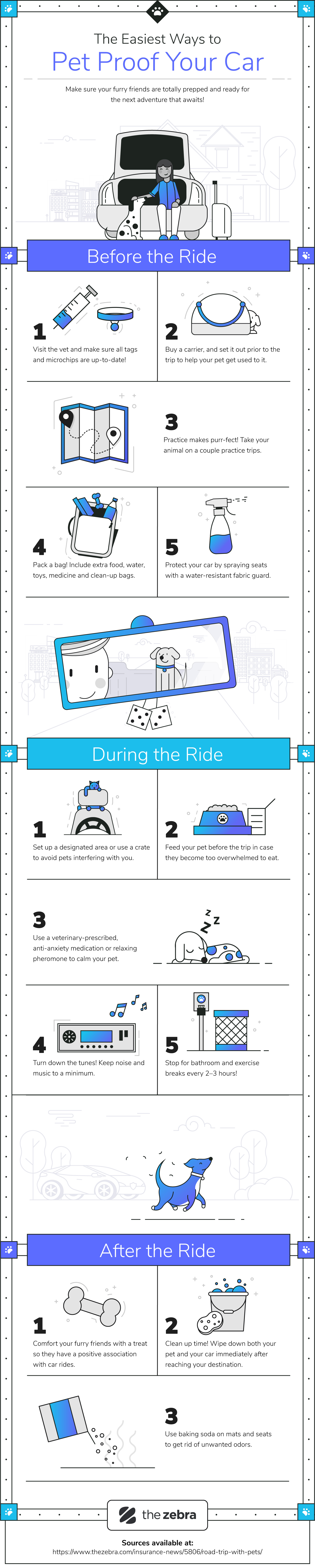
Easiest Ways to Pet Proof Your Car
Most dogs love going for car rides. With their head out the window, ears blowing in the wind, dogs are the picture of bliss when they tag along for the trip.
In reality, though, car rides can be very stressful for even the happiest dogs. Whether going on a cross-country road trip or just down the street, dogs often experience anxiety during a drive. This anxiety is caused by a number of things, including the movement of the car, the sound of the engine, or the possibility of a trip to the vet’s (eek!). If you aren’t careful, you’ll land up with a jittery pup and maybe even a ruined backseat.
The following post from The Zebra gives a collection of tips and tricks for keeping you, your dog, and your car happy on your next road trip. These tips give advice on what to do before, during, and after your car ride to keep your pup calm and your car clean.
In all the excitement of moving some people forget that it can be an incredibly stressful time for your pup. They don’t inherently know what’s going on, and may feel unsure about their place in the move and where they are heading.
To make your dog feel extra secure, there are certain things you can do. For example, before the move, it can be helpful to have some boxes out a few weeks early so that they get used to them. You can also ensure you spend lots of quality time with your furry friend to assure them they are still #1 in your heart.
During the move, remember to keep them safe by either crating them or taking them to a friend or family members house. Ensure they always have their collar and tags on just in case they escape. After the move, it can be helpful to spend a few days around the house with your dog to reassure them that they are safe.
Our friends at at HireAHelper put together a list of tips that dog pawrents can use to keep their pets, happy and calm during a move. You can see it below!
With more dog owners than ever in the US, 77% of people surveyed said their pets will influence their holiday travel plans. For many, that means pooch comes along too, and why not? What could be more fun than living in the countryside for a week or so with your canine best friend for company? The walking routes will be just a step away and it will give you a chance to detach from all the hustle and bustle of modern life and fully relax. However, there’s just a few things to take into consideration to ensure your holiday is problem free and great fun.
Health checklist to prepare your dog
Ensure your dog’s general healthcare is up to date, in particular vaccinations (including for heartworm which is now prevalent in the US) and that your dog has recently been wormed. If your dog takes any regular medication for ongoing conditions e.g. anti allergy tablets, then ensure you have had a recent review with your vet. Mention you are planning to take your dog on holiday and check your medication stocks are sufficient to cover that period of time. Also, ensure any veterinary insurance policies are up to date and pack the policy details, contact phone number and your veterinarian’s contact details. Alongside this paperwork you could also pack any medication supplies at this stage to cover the holiday period.