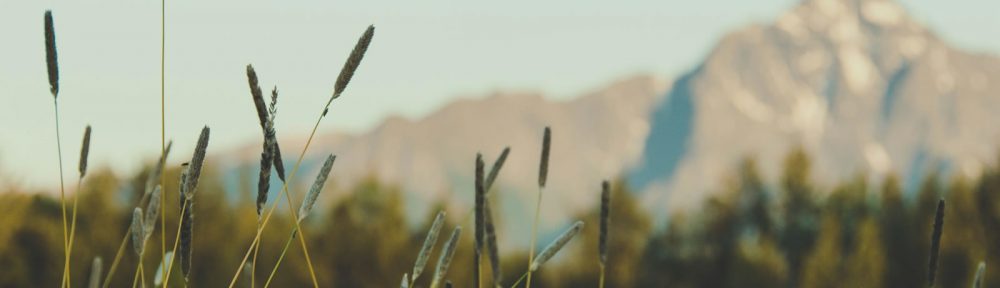
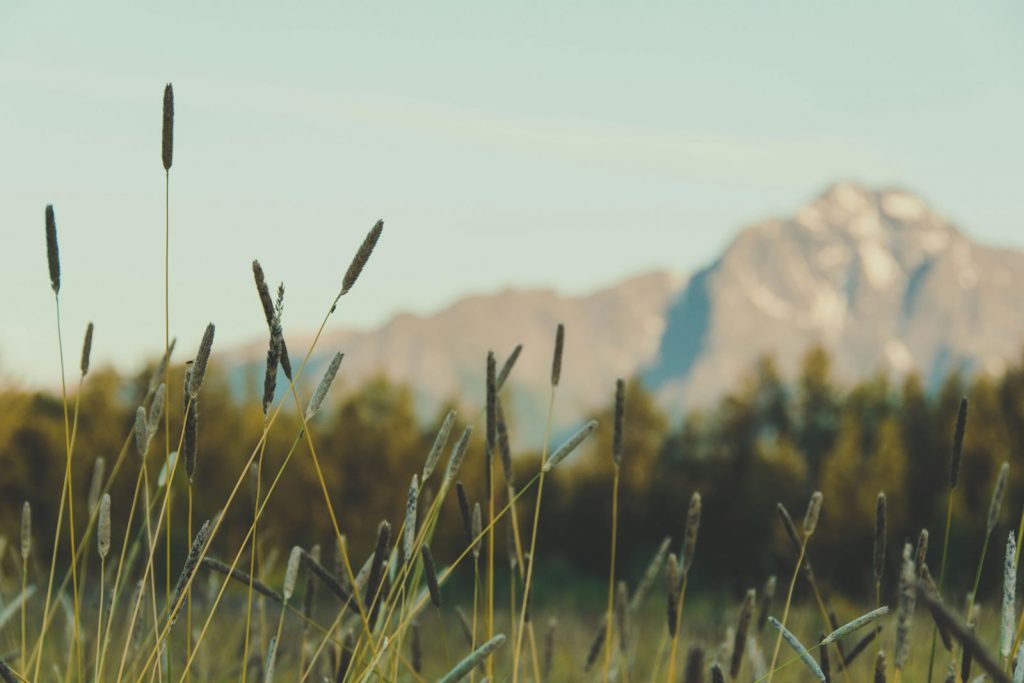
Alaska may seem harsh to outsiders — long winters, deep snow, and wildlife that doesn’t always respect your front porch — but for us kids growing up in the Matanuska Valley, life in Alaska was something special. Growing up in Alaska meant living by winter rhythms, sled dogs, and the mountains that surrounded us.
❄️ Life in Alaska: Winter Play, Ice, Snow, and Wool Socks on the Radiator
We skated on frozen gravel roads where cars drove every day. The town built an outdoor rink every winter, and we’d spend hours gliding across the ice, cheeks red, hearts light. Coming home meant woolen socks steaming on the radiator, filling the house with that unmistakable winter smell.
Some winter nights, when the sky was clear and the cold felt sharp enough to crack, the Northern Lights would ripple across the sky. Greens, purples, and curtains of white light shimmered above the mountains, moving like something alive. We’d stand outside in our boots and pajamas, breath hanging in the air, watching the whole sky dance. Even as kids, we knew it was something rare and beautiful — the kind of wonder that stays with you forever.
In 1963, my brother Ron remembers a snowfall so heavy it dropped 37 inches in one day. School was canceled, but we went anyway — recess all day long.
🫎 Moose at the Door – That’s Life in Alaska
We learned early to watch for moose in the yard. One day, I came home from school to find a moose at the front door, chewing on the bushes. I circled to the back — only to find another moose waiting there. My dad came home, grabbed a broom, and shooed them both away like it was just another Tuesday. That was just part of life in Alaska — sharing space with animals bigger than your car.
🫎 Moose Country: Caution, Courage, and a Sick Visitor
Living in a small Alaskan town meant sharing space with moose — big, unpredictable, and sometimes downright dangerous. We had to be careful walking to school and never took the shortcut through the woods. After hearing that the boy next door got into a fight with a moose, we were extra cautious.
We kids were afraid of them, but our dad didn’t seem to be. Once, a young sick moose wandered into our backyard. Dad tried to help it by feeding it vegetables, hoping it would recover. Sadly, Fish and Game had to put the poor thing down.
Growing up, we ate a lot of moose meat. Susie hated it. When she was grown and living away from home, Dad used to bring her moose meat — and King Crab — in a suitcase on the plane. “He knew I hated moose meat,” she said, laughing.
🐴 Birch: Our Imaginary Horse
My brother and I had a lot of fun on our pet horse named Birch. It wasn’t a real horse — it was a strong birch tree in our front yard with a limb sticking out just right. Dad put a saddle and reins on it, and we rode along imaginary trails for hours, galloping through adventures only kids can dream up. And only Alaskan kids could turn a birch tree into a horse and believe it completely.
🌍 The 1964 Earthquake: Four Siblings, Four Perspectives
Cold War Childhood in Alaska
Growing up in the 60s meant living with Cold War shadows. We practiced hiding under our desks at school, had air‑raid drills, and heard adults talk about Russia in hushed tones. So when the earthquake hit, it wasn’t surprising that some of us wondered if it was an attack. That fear was woven into the fabric of childhood back then. Life in Alaska during the 60s carried a mix of wonder and worry, and the earthquake brought all of it to the surface.
The Day the Earth Shook
The 1964 Alaska earthquake, also known as the Great Alaska Earthquake, March 27, 1964, will always be remembered. The earthquake caused ground fissures, and collapsed structures. There was a lot of damage in Anchorage. I guess Palmer was built on a good rock mass — that’s what I always figured. Sure, we had things tip over and break, but I don’t remember the ground opening up underneath us. Our cars didn’t fall into a fissure like we saw on TV and in the newspapers.
The quake measured 9.2, the most powerful earthquake ever recorded in North America. Most damage occurred in Anchorage. Downtown Anchorage was heavily damaged. I remember that the Turnagain neighborhood suffered landslide damage. Because of this memory I have always said there is no way you can get me to live in a house on the side of a hill overlooking water just waiting to slide away.
There were hundreds of aftershocks in the first weeks following the earthquake. Some aftershocks were greater than 6.0, and for months we felt thousands more. We could hear them coming, like a train or a bunch of trucks rumbling along, getting closer and closer.
Sharon remembers the earthquake sounded like a huge truck going by, so for awhile when a big truck went by it felt like we were getting another earthquake.
She remembers we didn’t have electricity for several days. Our house was heated with coal that was fed into the stove by an electric auger so the coal had to be shoveled in. She remembers when we had aftershocks being afraid we were going to have the damage like Anchorage had.
My memory
I was in my bedroom in the basement when I heard the rumbling before the shaking even started. Then it hit — hard. I couldn’t stand up. My dresser tipped over. I crawled under my bed and stayed there, convinced it was the end of the world.
Sharon’s memory
After the earthquake, we went downtown Anchorage and saw a sign taped to a business window that read: “I knew we might have trouble making ends meet, but I never thought we’d be this far in the hole.” She also remembers being in the school gym playing basketball when the shaking began. For a moment, she thought the Russians were attacking — a fear that was very real for kids growing up during the Cold War.
Ron’s memory
Ron was riding his bike home after the Matanuska Maid steam whistle sounded at 5:00 pm. Suddenly, his front wheel started shaking, and he thought it was coming off — but no, it was the earthquake. The shaking went on for over four minutes — a whole lot of shaking going on.
Ron remembers going to B&B Market afterward. Back then, so many products came in glass bottles. The aisles were covered in broken glass — a huge, glittering mess that took days to clean up.
Susie’s memory
Susie was supposed to go on a date with Richard (her future husband). She didn’t think the earthquake seemed that bad, so when he called to cancel, she asked why they weren’t going. His parents, the Bolens, owned B&B Market, so she went down to help them clean up the shattered bottles and toppled shelves.
🐾 Sled Dog Life in Alaska: Huck’s Story
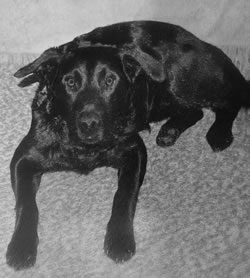
Ron had a black lab named Huck — short for Huckleberry Hound. One winter, our dad brought home a sled dog harness. Huck pulled Ron on his sled all over Buggy’s field, tail wagging, heart full. Ron even hooked him up to his bike once. That worked until Huck spotted a flock of birds and took off, sending Ron flying.
When Ron moved to Idaho, Huck missed him terribly. So my sister Sharon and her husband, Paul, loaded him into their 1972 Toyota and drove him down the Alaskan Highway — a four‑ or five‑day trip. Huck was overjoyed to be reunited with Ron. “Still missed,” Ron said. “Mush on.” Huck’s story is woven into our life in Alaska, even after he followed Ron to Idaho.
Huck lived a long, joyful life — eighteen or nineteen years by my brother’s memory. He loved the wide‑open shores of Lucky Peak Reservoir, racing along the waterline and fetching anything Ron could throw. Those Idaho years felt like bonus time, a final chapter filled with sunshine, shoreline, and the kind of loyalty only a childhood dog can give.
🧥 Anchorage Store Windows and Susie’s Parka
Sharon remembers visiting Anchorage and being awestruck by the store windows — fur coats hanging like royalty, jewelry crafted from ivory and green jade, tiny gold nuggets embedded in scrimshaw scenes of sled dogs and paddlers.
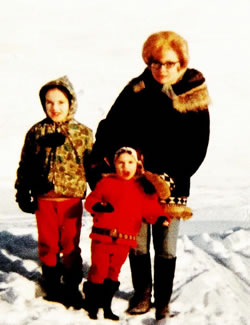
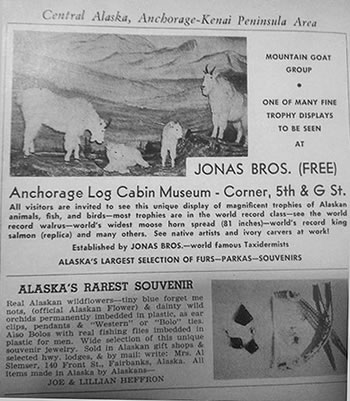
In 1963, my sister Susie bought a mouton parka with wolverine and seal trim from the Jonas Brothers Fur Store in Anchorage. She paid for it with money she earned working in the cabbage fields — a true Matanuska Valley story. That parka still lives with her today.
The Jonas Brothers Fur Store was a fixture in Anchorage for decades, and this 1959 Milepost travel‑guide clipping shows exactly the kind of place where Susie bought her parka.
🏁 Life in Alaska: The Iditarod and Fur Rendezvous
Every winter, Alaska comes alive with the energy of the Fur Rendezvous and the Iditarod sled dog races. Even though we lived 50 miles from Anchorage, we felt the buzz. The whole state seemed to vibrate with anticipation.
The Fur Rendezvous — or Fur Rondy — began in 1936 as a three‑day winter sports carnival to lift spirits during the long Alaskan winter. Today, it features sled dog races, snow sculptures, outhouse races, and community celebrations that bring people together from all over the state.
Sled dogs are at the heart of these celebrations, embodying the endurance, spirit, and history of Alaska’s winter culture. Watching them race across frozen lakes brings back memories of my dad going ice fishing and letting me practice driving on the frozen lake. That same mix of freedom and trust is what I see in those dogs.
🐇 Pets, Rabbits, and a Mouse Up the Sleeve
Sharon said it seems like we always had some kind of pet — dogs, cats, rabbits, even a Shetland pony.
Dad once brought home a rabbit that was supposed to be a male. In the middle of winter it gave birth. The rabbit kicked them out of the nest, so we put the babies in the oven to keep them warm. After that, the rabbits lived in the unfinished side of the basement.
Ron added: “Don’t let those bunnies fool you. I remember being bitten on the leg by a mother bunny when I got between her and her babies. I think I may still have a scar.”
And then there was the mouse incident. Ron said:
“One day I went to feed the rabbits. We had an old kitchen stove out back where we stored rabbit food. I stuck my arm in the bag and a mouse ran up my sleeve. I survived; the mouse passed out. I’ve never done that again. Heart pounding.”
❄️ Winter Life in Alaska: Ice Skating Ponds and Frozen‑Lake Driving Lessons
Ron shared more memories about the ice skating pond, recalling that he helped fill it when he was a volunteer fireman.
He also remembers his first driving lesson: “No, not a parking lot. No, not a country road. It was a frozen lake. You could drive for miles — just watch out for the snow drifts.”
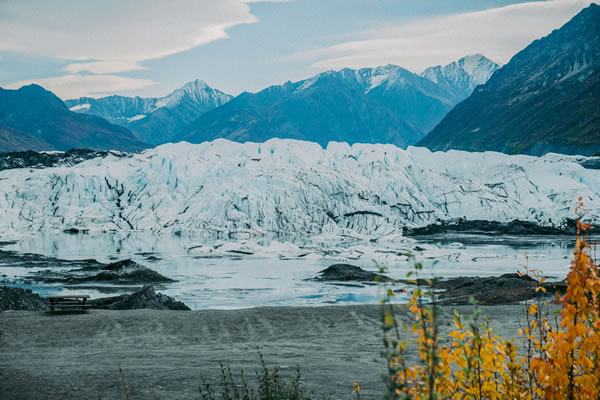
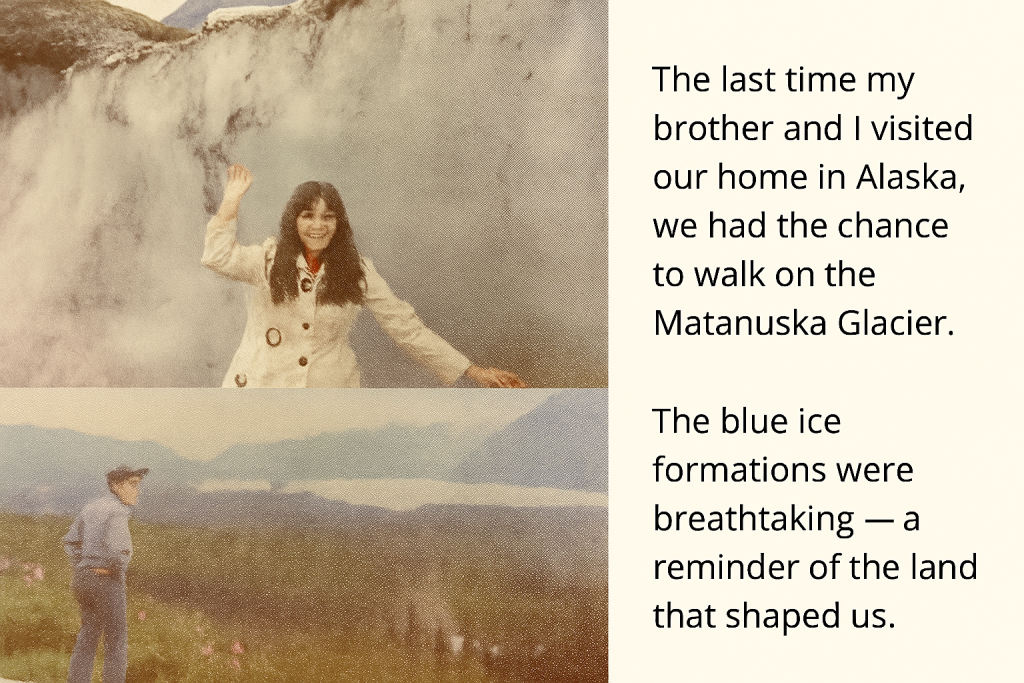
🏔️ A Glacier Walk and More Memories to Come
🧊 Everyday Abundance in a Small Alaska Town: Life in Alaska at Its Warmest
Life in Alaska wasn’t always dramatic or wild — much of it was shaped by the quiet routines that filled our days.
Everyday Life in Alaska: Our Basement Game Room
When we were older, Ron and I spent hours in our basement game room — really just a full‑sized pool table squeezed into a room that was a little too small for it. Dad surprised us with it one day: green felt, a rack of cue sticks, billiard balls, and chalk. It wasn’t the ideal setup, but it was ours. We practiced with friends, stretching our arms just right to line up a shot between the table and the wall only a few feet away. I still wonder what ever happened to that pool table.
Some of our richest memories weren’t big or flashy — they were just part of daily life. Our dad worked at the Matanuska Maid Creamery, and our mom at the Alaska Experimental Station. Between them, our freezer was always full — with ice cream that didn’t quite make the cut, and beef wrapped in wax paper we helped package ourselves. We weren’t rich, but we were never hungry. And we were surrounded by people who shared, showed up, and made things work. It was an ordinary kind of life in Alaska, but it shaped us in extraordinary ways.
🌞 Life in Alaska: Summer Fun
Summer Life in Alaska: Long Days and Light
Our childhood wasn’t just shaped by winter. We had summer too. The land of the midnight sun had wonderful summers, May through September. We would play outside late into the evening because it didn’t get dark until very late. We enjoyed the outdoors, Ron played little league baseball and I cheered him from the stands. We did some fishing and hiking, playing in the fields until it got dark. I don’t remember much about our fishing trips, but I do remember dad had a smoker and he made the best smoked salmon. Some days dad would bring home King Crab legs, they smelled fresh like the ocean.
Swimming, Leeches, and Tasty Freeze Treats
We went swimming in lakes filled with leeches, but that didn’t bother us. Getting them off was easy — we had our own techniques. We would bring along a shaker of salt. After we went swimming in the lake, on our way home we would stop at the Four Corners Tasty Freeze and grab an ice cream cone dipped in chocolate or a hamburger and fries.
Working the Fields: Cabbage, Lettuce, and Giant Vegetables
Some of us worked in the cabbage or lettuce fields for summer jobs. Some days it would get so hot working in the field that we would start our day early in the morning before it got too hot. The Matanuska Valley grows amazingly huge vegetables because of its fertile soil and close to 20 hours of sunlight in the summer.
Alaska State Fair Memories
The other thing we did in the summer was go to the Alaska State Fair, which was in our home town. When I was very young, before they built the new fairgrounds, the old fairgrounds were pretty close to our little house. We used to go over and visit with the army guys who were on the grounds in tents. They would give us chocolate candy in cans, I guess they were called combat rations.
The Day JFK Came to the Fair
I must have been about 6 or 7 years old when Senator John F. Kennedy came to visit the Alaska State Fair in 1960. I’m not sure if this memory is truly about Senator Kennedy, soon to be President Kennedy, but I remember being in a foot race at the fair. There were some men in suits sitting toward the front of the grandstand, and one of them motioned to me and said, “Run fast, I’m betting on you.” My memory is that I won the race, and the men in black suits and skinny ties congratulated themselves and me. To this day, I still think that was our future president, John F. Kennedy, and that he even shook my hand.
Of course, I had no clue who he was at the time. A few years later, when we were in grade school, we heard that this loved and respected president had been killed. It was a very distressing time for all.
Summer Road Trips on the Alcan Highway
We also have memories about traveling out of Alaska on the dusty Alcan Highway through Canada in the summer. Dad would turn on the car headlights, to make sure our car was seen around corners and through the haze of dust by oncoming traffic. It wasn’t much fun to travel behind a big semi truck, so they would pull over and let us pass. It would take us 5 or 6 days of driving to get to our grandfathers home in Washington State. Of course, like everyone who traveled to the lower 48 we had our trusty Milepost travel guide to assist in planning our trip.
There were plenty of wildlife sightings, and the road was full of bumps and ruts. Sometimes we had to take a little hike into the woods when there was no bathroom in sight. We had beauty all around us traveling through the Yukon Territory and British Columbia.
The Canadians were good neighbors. However, we never understood why our soda drinks came without ice. We liked ice in our drinks. We had no problems passing through the border, but today I would need a passport.
The 1962 Seattle World’s Fair
In 1962 we drove from Alaska to Seattle to the World’s Fair. We saw the Space needle and we were so excited to be there and see all the sights. One small problem: Ron got lost in the huge crowd of people. We were frantically searching for my brother, finally we found him and Ron told us he wasn’t the one who was lost at all — he says we were lost, and he was the one who found us. To this day Ron still insists he wasn’t lost — we were.
🥛 Matanuska Maid and the Freezer Full of Ice Cream
Growing up in Palmer meant our freezer was always full — sometimes with ice cream that didn’t quite make the cut, sometimes with beef wrapped in wax paper we helped package ourselves.
Everyday Life in Alaska: Work, Food, and Community
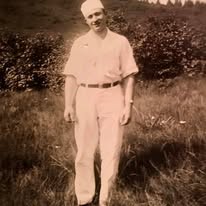
Before Dad worked at the creamery in Palmer, he spent some time in Kodiak. This picture is from those early years — long before Ron and I were born.
Our dad worked at the Matanuska Maid Creamery — a beloved name in Alaska. Everyone knew they had the best milk, ice cream, and cottage cheese. When we were little, the creamery was just down the road from our grade school. That’s where we lined up and marched during air raid drills, practicing for a kind of fear that always hovered in the background.
Eventually, the company moved the creamery to Anchorage. Dad and many of his coworkers chose to keep their families in Palmer, so they drove 45 to 50 miles each way, every day. Winter roads were icy and unpredictable, but they made the trek — loyal to their town, their families, and each other.
At home, our freezer was filled with ice cream rejects from Matanuska Maid. Too much chocolate, too many cherries, or experimental flavors that didn’t quite make the cut. Everyone knew: if you came to the Marple house, you’d get great ice cream.
A friend once told me that whenever he went to the creamery with his dad to drop off milk from their dairy farm, our dad would always bring him back to get an ice cream bar. That was just the kind of man he was.
🥩 Mom’s Beef and a Full Freezer
Our mom worked for the Alaska Experimental Station. Sharon remembers that because of her job, Mom was able to get beef at a good price. We all helped Dad cut up the meat and package it for the freezer. Between the beef and the ice cream, we were never hungry.
Alaska shaped us — not just with its landscape, but with its spirit. It lives on in every memory we share, every parka pulled from a hook, every dog harness tucked away, and every wool sock drying on the radiator. Those seasons — the deep winter cold and the long summer light — shaped who we became.
🔗 Want to Wander a Little Further Into Alaska?
If you’re curious about the world behind these memories, here are a few favorite links:
- 🏔️ Matanuska Valley — the place that shaped our winters
- 🐕 How Sled Dog Harnesses Work — for fellow dog nerds
- 🎡 JFK’s Visit to the Alaska State Fair — a surprising moment in Alaska history
➡️ A Day in the Life of a Sled Dog: Told by Me, the One With the Frosty Whiskers A playful, immersive look at winter from a sled dog’s point of view — full of trail routines, team dynamics, and the heart of Alaska’s racing culture.
AMAZON FINDS
Blue Belle is a cancer survivor, and her ongoing medical expenses add up quickly. By using our Amazon Affiliate link, you help support her care at no extra cost. We’re grateful for every bit of kindness. Browse our Amazon Finds →
Pingback: Gardening With Dogs | Spring Is ComingDogBlog: A Dog's Eye View
Pingback: Sled Dog Life: Frosty Whiskers Runs Under the Northern LightsDogBlog: A Dog's Eye View