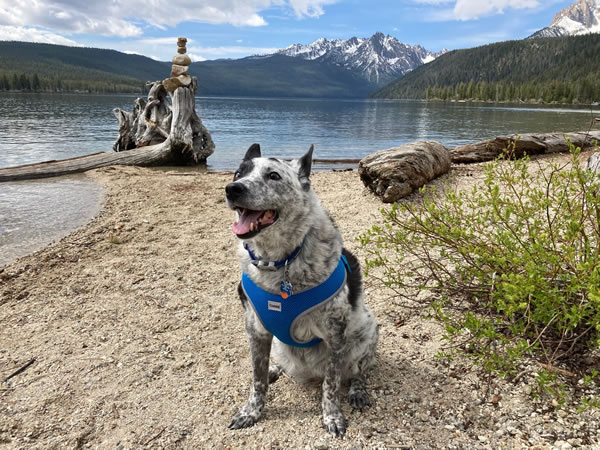
Caring for a dog who is losing their vision can feel overwhelming at first, and we quickly found ourselves searching for simple, loving ways to support Blue Belle as her eyesight changed. Many dogs adapt beautifully to vision loss, as explained in this guide from the American Kennel Club. If you’ve ever wondered how to help a blind dog feel safe and confident at home, you’re not alone. Blind and vision‑impaired dogs adjust remarkably well with just a few thoughtful changes, and many of those adjustments are easier than you might expect.
As Blue Belle’s cataracts progressed, we learned how much small environmental tweaks—soft lighting, cushioned edges, predictable pathways, and gentle guidance—could transform her daily comfort. Here we’re sharing the simple, practical steps that helped Blue Belle navigate her world with confidence—tips that may help your blind or vision‑impaired dog as well.
Blue Belle has been part of our lives for more than a decade, and many of the lessons we’ve learned about caring for senior and vision‑impaired dogs come directly from her journey. If you’d like to explore more of her stories, you can read about her early adventures or how she adapted to new routines as her vision changed.
Best Night‑Light Solutions for Blind or Vision‑Impaired Dogs 🌙
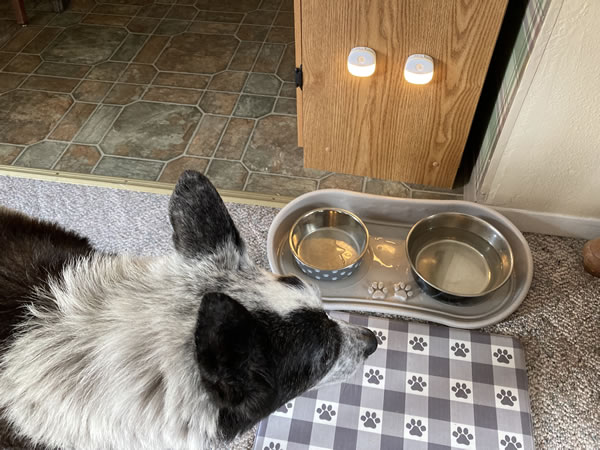
One of the first challenges we noticed was nighttime navigation. Blue Belle could still find her water dish, but she sometimes hesitated or bumped into things on the way. We wanted to give her a gentle visual cue without flooding the house with bright lights. So we started with with AUVON Rechargeable Battery Night Lights—the little motion‑sensor ones. Two of them went right above her food and water dishes and they were perfect:
- They turn on automatically when she approaches
- They’re rechargeable
- They give off a warm, soft glow that doesn’t startle her
We liked them so much that we added more in the bedroom where she sleeps. Then we picked up a couple of DORESshop plug‑in night lights for other areas of the house. These stay on at a low level and brighten as needed, which helps her orient herself without any sudden glare.
It’s amazing how much confidence a few thoughtfully placed lights can give a dog who can’t rely on her eyes the way she used to.
How to Make Your Home Safe for a Blind Dog
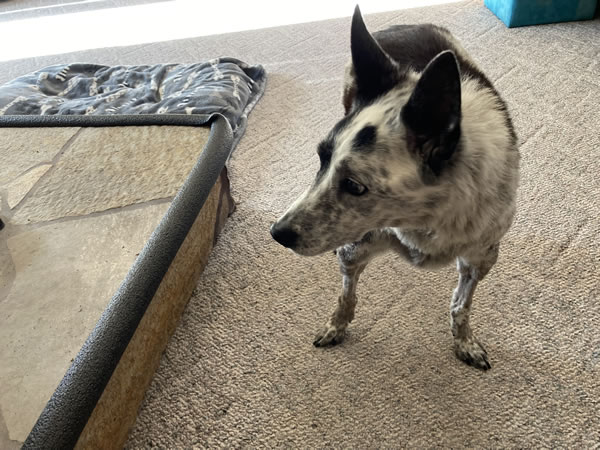
Seeing these small changes together, one of the first areas we focused on was making our living room safer for Blue Belle.
Our wood‑stove hearth has beautiful stonework—but sharp corners. Once Blue Belle’s vision declined, we realized those edges were a real hazard. We didn’t want her to get hurt just walking through her own living room.
Our solution was wonderfully simple: slit pipe insulation. We wrapped it around the stone edges, creating a soft bumper. It blended in better than we expected, and more importantly, it worked.
The very next day, Blue Belle bumped into the hearth. Instead of a painful impact, she just bounced off the padding and kept going. We looked at each other with so much relief. That little foam bumper earned its place in the house forever.
Once we had her indoor spaces protected, our attention naturally shifted to the outdoors—another place where small changes made a big difference. We began looking at how to help a blind dog explore the outdoors with confidence.
🌿 How to Help a Blind Dog Explore Outdoors
Learning how to help a blind dog feel secure outdoors starts with predictable paths and gentle guidance. Blue Belle doesn’t wander far outside anymore, but she still loves her time in the yard. What’s changed is how she explores.
Blue Belle sniffs the air. She sniffs the ground. She pauses, listens, and takes her time.
It’s slower, quieter, and somehow more intentional. Watching her enjoy the world this way has taught us to slow down too. She may not see the yard clearly, but she experiences it deeply.
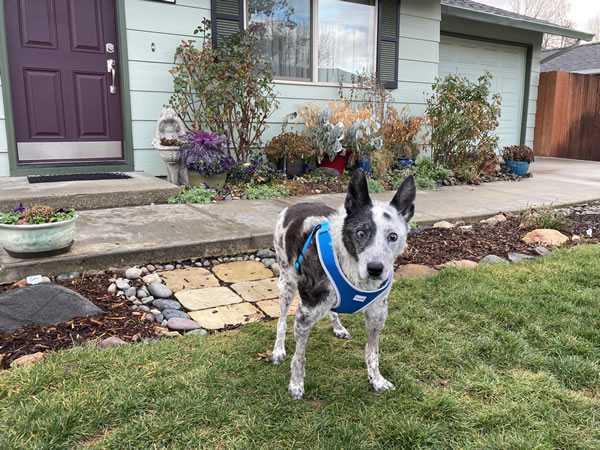
We guide her with a harness now, just to make sure she stays safe, but she leads the pace. It’s her walk, her world, her moment.
As we spent more time outside with her, we realized she needed a clear, safe route through the garden—something she could learn and trust.
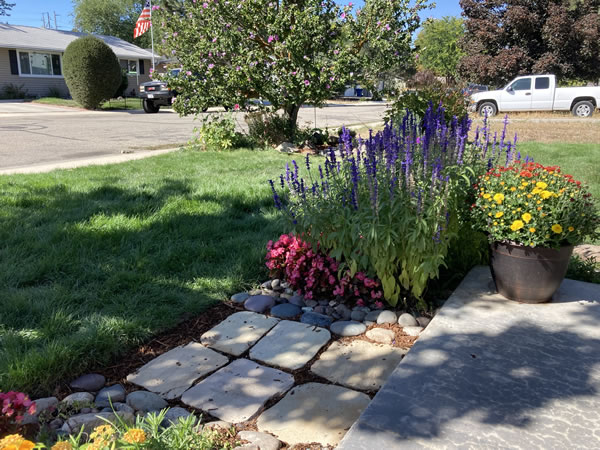
One of the most helpful changes we made was creating a predictable, textured path she could follow with confidence. We built a wide stone walkway through the garden using Natural Sandstone Stepping Stones, laid double wide so she had plenty of room to walk with us beside her, holding her harness for support.
We call it her path. When she tries to shortcut through the garden toward the front door, we gently guide her back with the cue, “Let’s go on your path.” She knows the word now, and you can see her relax as soon as her paws touch the familiar stones. The steady texture underfoot, the clear boundaries, and the simple verbal cue all work together to help her move safely from the garden to the grass.
Understanding Your Blind Dog’s Communication Cues
Blue Belle has never been a big barker. She’s always been more of a “quiet observer.” But she does have one very specific, very effective bark—a single sharp command she uses when she wants Murry to bring her a treat.
It’s not a request. Not a suggestion. It’s a summons.
She’ll be in the bedroom with me, give one crisp bark, then turn her head toward the door and listen. She knows exactly what she’s doing. And she knows Murry will come.
It’s one of the many ways she reminds us that vision loss hasn’t changed her personality one bit. She’s still smart, still expressive, still in charge of her household staff.
❤️ ❤️ ❤️ ❤️ ❤️
Final Thoughts: Supporting a Blind Dog With Confidence and Love
Helping a blind or vision‑impaired dog isn’t about feeling sorry for them. It’s about giving them tools to stay confident, safe, and independent. For Blue Belle, that meant:
- Soft lighting she can rely on
- Cushioned edges to prevent injury
- A harness for gentle guidance
- A home that stays predictable
- And, of course, a treat‑delivery system activated by one authoritative bark
She may not see the world clearly anymore, but she still enjoys it fully—and we’re grateful every day to help her do that. These small adjustments can make a big difference when you’re figuring out how to help a blind dog stay confident and comfortable.
If you’re wondering whether your dog might need a specialist, you may find our visit to the veterinary eye doctor helpful.
Affiliate Disclosure
Some of the links in this post are affiliate links, which means I may earn a small commission if you choose to make a purchase. I only share products we use and love with Blue Belle, and I hope they’re helpful for you and your dog too.
Pingback: Does My Dog Need to See an Eye Doctor? | A Dog’s Eye ViewDogBlog: A Dog's Eye View
Pingback: Dog Powered Scooter Update: New Photos From the InventorDogBlog: A Dog's Eye View