
Sometimes, when our dogs are anxious, restless, or simply having a tough day, we naturally look for gentle ways to help them feel safe. One surprisingly powerful tool — and one Blue Belle responds to beautifully — is calming music for dogs. Not just any music — but sounds and rhythms that speak to a dog’s unique hearing and emotional world.
In fact, today, music made a real difference for Blue Belle, and her experience mirrors what researchers and veterinarians have been saying for years: the right music can calm a dog’s nervous system and help them relax.
🐾 Blue Belle’s Rough Day — and the Moment Music Helped
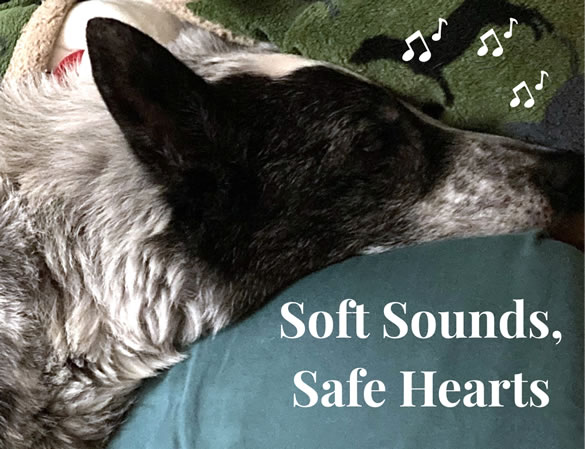
Recently, Blue Belle has been going through a medication transition — slowly shifting off one cancer medication and onto a new arthritis treatment. Anyone who has cared for a senior dog knows how these changes can make them feel unsettled. Today, she was restless, pacing, unable to settle into sleep.
Then I remembered something important: during New Year’s Eve fireworks, I played calming dog music — and she stayed relaxed the entire night.
So tonight, I asked Alexa to play calming dog music again. Afterward, within minutes, Blue Belle softened. Then her breathing slowed. Her body relaxed. And eventually, she drifted into sleep.
Ultimately, this wasn’t a coincidence. It’s something science supports.
🎶 Why Calming Music Works for Dogs
🐕 Dogs Hear the World Differently
As a result, dogs have more sensitive hearing than humans and can detect frequencies we can’t. This means music affects them in ways that are both physiological and emotional.
💛 How Calming Music for Dogs Reduces Stress and Anxiety
For instance, research shows that certain types of music — especially classical, soft rock, and gentle instrumental tracks — can lower stress levels in dogs.
These sounds can:
- Slow heart rate
- Reduce cortisol (the stress hormone)
- Encourage restful behavior
- Mask scary noises like fireworks or thunder
🎼 Not All Genres Are Equal
In fact, studies suggest that classical and soft instrumental music are the most calming, while heavy metal or fast, erratic rhythms can increase agitation.
Some dogs even show preferences — just like humans.
💤 How Music Helps Restless or Recovering Dogs
For dogs dealing with:
- Medication changes
- Pain or inflammation
- Cognitive decline
- Noise sensitivity
- Separation anxiety
Calming music can be especially helpful for dogs experiencing these challenges, including those with separation anxiety. We’ve shared more about supporting anxious dogs in Stay With Me: Helping Your Dog Cope With Separation Anxiety.
Overall, music can act as a gentle, non-invasive support tool.
As a result, it creates a predictable, soothing environment — something especially comforting when their bodies feel unpredictable.
📻 What Kind of Calming Music Should You Play for Dogs?
Based on research and veterinary recommendations:
Best Choices
- Classical music
- Soft piano
- Acoustic guitar
- Species-specific calming tracks (designed for canine hearing)
- Slow-tempo instrumental playlists
Avoid
- Loud, bass-heavy music
- Fast, high-energy genres
- Anything with sudden volume changes
For instance, many streaming platforms now offer “calming dog music” or “relaxation for pets” playlists — exactly what helped Blue Belle tonight.
Additionally, Amazon Music also has a Relaxation for Pets playlist, which is designed specifically for soothing background sound. (As an Amazon Associate, I earn from qualifying purchases.)
Beyond that, music is just one way to support your dog’s emotional well‑being. If you’re looking for more enrichment ideas, our guest writer shared wonderful tips in Providing Mental Stimulation for Your Dog’s Happiness and Well‑Being.
🐶 Blue Belle’s Takeaway: Music as a Comfort Tool
Overall, Blue Belle’s response tonight is a beautiful reminder that dogs communicate their needs through behavior. When she was restless, her body was telling us she needed help settling. Music gave her a safe, familiar anchor.
As a result, it didn’t replace her medication or her care — but it supported her emotionally, helping her body relax enough to rest.
And for a senior dog navigating health challenges, that rest is priceless.
💬 Final Thoughts
Ultimately, music isn’t magic — but it is a powerful, science-backed way to support your dog’s emotional well‑being. Whether your dog is anxious, recovering, aging, or simply sensitive to noise, the right playlist can make a meaningful difference.
In the end, Blue Belle’s peaceful sleep tonight is proof.
📚 Resources
Here are the studies and articles referenced in this post:
- AKC: Why Music Is Therapeutic for Dogs
- AMCNY: How Music Benefits Dogs — Species‑Specific Music
- Cambridge University: Influence of Auditory Stimulation on Shelter Dogs
- iHeartDogs: How Dogs React to Different Music Genres
- DogBlog: Helping Dogs Stay Calm During New Year’s Eve Fireworks
Continue the Dog Stress Relief Series:
If you’re following along with our Dog Stress Relief series, this post builds on the foundation we set in Understanding Stress in Dogs. Once you know how stress shows up in your dog’s body and behavior, tools like calming music make even more sense — and become even more effective.
Finally, if you’d like to explore some of the tools and comfort items that help Blue Belle at home, we’ve gathered a few of our favorites below.
AMAZON FINDS
Blue Belle is a cancer survivor, and her ongoing medical expenses add up quickly. And when you use our Amazon affiliate links, you help support her care at no extra cost — and we’re deeply grateful for every bit of kindness.
For this post, we’ve gathered a few gentle, comfort‑focused Amazon Finds inspired by Blue Belle’s needs — calming tools, senior‑dog essentials, and items that help create a peaceful environment for rest and relaxation.
Browse our Amazon Finds →
(As an Amazon Associate, I earn from qualifying purchases.)
Senior Dog Essentials We Recommend
Caring for a senior dog means creating a world that feels safe, soft, and predictable. These are some of the comfort‑focused essentials that have helped Blue Belle — and may help your dog feel more relaxed and supported too.
Comfort & Rest
- Orthopedic dog bed — Helps cushion aging joints and gives senior dogs a soft, supportive place to rest.
- Thermotex Far Infrared Pet Pad — Uses patented far‑infrared heat to penetrate deeply into muscle tissue, increase circulation, and ease arthritis‑related stiffness. It’s a safe, steady source of warmth for senior dogs who need extra comfort.
- Soft, washable blankets — Easy to clean and perfect for layering warmth and comfort.
- Calming snuggle toys — Provide gentle reassurance for anxious or restless dogs.
Mobility & Arthritis Support
- Joint supplements — Support mobility and help ease stiffness in older dogs.
- Non‑slip rugs or stair treads — Prevent slipping on hard floors and help senior dogs feel secure.
- Dog ramps or steps — Make it easier for dogs to reach beds, couches, or cars without strain.
Anxiety & Calming Tools
- Calming dog music — Soothes the nervous system and helps dogs settle during stressful moments.
- Anxiety wraps — Provide gentle pressure that helps reduce anxiety.
- Calming chews — Offer natural support for dogs who struggle with restlessness or stress.
Daily Care
- Pill pockets — We recently added these to Blue Belle’s routine because one of her new medications tasted bitter and she kept spitting it out. The pill pocket worked instantly and made medication time stress‑free for both of us.
- Raised food and water bowls — Reduce neck strain and make mealtimes more comfortable.
- Grooming tools for sensitive skin — Gentle on aging skin and help keep coats healthy.
Pingback: Dog Fireworks Anxiety: Blue Belle's Guide to Staying CalmDogBlog: A Dog's Eye View
Pingback: Quality of Life for Senior Dogs: How to Support Your Aging DogDogBlog: A Dog's Eye View
Pingback: Stress in Dogs: Understanding the Signs | Dog Stress Relief SeriesDogBlog: A Dog's Eye View